Why We Give: Nicole German
September 15, 2026
10 min read


How Nicole German and her family created The Maddie Project to keep her daughter’s memory alive, encourage open conversations about youth mental health, and give the community a place to take action.
Purple reminds Nicole German of her daughter, Madeline (“Maddie”).
Maddie was the kind of person people noticed when she walked into a room. She was outgoing, funny, warm, and full of energy. She loved to laugh, sing, dance, and shop with her friends. She also cared deeply about doing well at school and in sports.
More than anything, Nicole says, Maddie cared about people.
“When people remember Maddie, they don’t just remember her smile,” Nicole says. “They remember how she made them feel.”
Maddie’s wish to do something good

Maddie’s struggle with depression was gradual. Nicole remembers it unfolding through anxiety, difficulty focusing at school, missed homework, and then the painful cycle of falling behind and feeling worse about herself.
“As a mom, there is nothing worse than seeing your child struggle,” Nicole says.
Maddie died from depression 11 years ago, at age 14.
In the grief that followed, Nicole and her family chose to be open about what had happened.
At the time, mental health was still something many people avoided talking about. But once they shared Maddie’s story, people began coming forward with their stories and experiences.
“There was sort of this floodgates of people coming and telling their stories,” Nicole says. “Before then, nobody was really talking about it openly.”
When Maddie was in the hospital, she often spoke about raising money to put a gym in the hospital once she got better. Each day, she learned about the importance of nutrition, self-reflection, movement, and self-care, while receiving care in an institutional setting that did not always reflect those ideas.
She wanted other young people to have a better experience than she did.
After she passed, The Maddie Project became the way Nicole made that dream come true. “The Maddie Project isn’t simply something we created in her memory,” Nicole says. “It’s our way of fulfilling the wish she never had the opportunity to realize herself.”
From donations in Maddie’s memory to The Maddie Project
It began simply. People wanted to honour Maddie, and the family asked for donations to the cause in lieu of flowers. “It just really snowballed from there,” Nicole says.
In the early days, the family partnered with North York General Hospital, where Maddie had spent time, to support youth mental health care. The momentum grew into a commitment to raise $1 million for what is now Maddie’s Healing Garden, a 1.2-acre garden surrounding the hospital’s youth mental health facilities. The project continues to support youth mental health care at the hospital.
For Nicole, the garden connects directly back to what Maddie had noticed in the hospital. A hospital environment can be difficult for a young person and their family. The garden offers a more welcoming space where kids can spend time outside, connect with others going through something similar, and find moments of care amid treatment.
“Just to have this legacy for her would be so meaningful,” Nicole says. “She will always be there.”
The project has also donated $100,000 toward a counselling office at Stella’s Place; raised more than $200,000 to help increase children and youth walk-in clinic capacity through Lumenus (formerly Skylark); and funded more than 800 wellness-based art activity kits with DAREarts for young people in need. It has also funded multiple years of Connecting with Courage through Outward Bound Canada, a week-long, fully funded program for youth.

To date, the Maddie Project has raised nearly $3.5 million in support of programming and services.
The name ‘The Maddie Project’ emerged as the initiative took shape. It gave people a shared identity to gather around.
The lavender logo and purple identity also carried Maddie’s presence into the work, reflecting a colour Nicole associates with her daughter’s personality and with the project’s focus on youth mental health.
Why Nicole gives
For Nicole, giving was a way to respond to something she would never want another family to experience.
When Maddie needed support, Nicole remembers how hard it was to find it. There were few facilities, limited online options, long waits, and gaps in care. She also remembers how frightening it was to try to help a child in deep distress without fully knowing what to do.
“It was very scary to be dealing with a child that was going through such distress and not really understanding how to help,” she says.
That experience shaped The Maddie Project’s focus on adolescence and early adulthood. Nicole describes a gap for young people who are no longer treated as children, but who may not yet fit easily into adult systems of care. The project has stayed centred on youth mental health, especially for young people under 21, with attention to the families, caregivers, coaches, teachers, and communities around them.
“It’s not just about the kids and youth, but it’s also their families and their ecosystems,” Nicole says.
At first, Nicole thought The Maddie Project would give people a way to honour Maddie through donations. But as more people reached out, she began to see that the project had become something more.
Parents, teachers, coaches, friends, young people, and families Nicole had never met began sharing stories about anxiety, depression, and loss, sometimes after years of silence. “Just by having a conversation, you’re making change,” Nicole says.
That was when Nicole realized The Maddie Project was about more than fundraising. The giving was still important, but it was part of a movement centred on conversation, connection, and hope.
A platform people could make their own
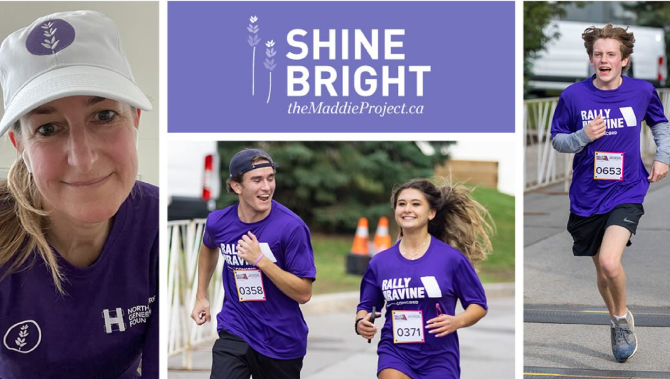 Nicole and her family wanted to protect that spirit. They did not want to build and manage a separate charitable organization.
Their focus was on raising awareness, building partnerships, and supporting established charities already delivering youth mental health care while keeping The Maddie Project as the shared name and story that people could gather around.
To do that, Nicole needed more than a standard donation page. She needed a structure that could help The Maddie Project grow under its own name, receive donations from the community, issue charitable tax receipts through a registered charity, hold funds until they were ready to be given, and support multiple youth mental health charities over time.
That structure came through a donor-advised fund powered by Charitable Impact. For The Maddie Project, this meant Nicole could keep the focus on Maddie’s story, community connection, and support for trusted youth mental health programs without having to create and manage a separate registered charity.
Charitable Impact’s Giving Groups and Campaigns tools – free, customizable fundraising pages – also made it possible for others to fundraise on behalf of The Maddie Project through their own initiatives. For Nicole, setting up a Campaign page helped her community take initiative because The Maddie Project was growing through many different community-led efforts at once.
“It’s been such a nice partnership with Charitable Impact because it’s easy for us to be able to interlink and connect the donations,” Nicole says.
Individual Giving Groups could act like their own fundraising pages for the project, each with its own story, goal, and community. The Campaign brought those Giving Groups together under one shared umbrella, so money raised through different events and initiatives could roll up into the broader Maddie Project effort.
That structure helped Nicole welcome more community participation. “Typically, someone will message me and say, I really want to do something. I’m interested in supporting youth mental health, and I want to support The Maddie Project,” Nicole says. “I’ll grab a quick call with them and say, ‘Tell me about what’s your passion, what do you like to do, what are you thinking?’”
From there, the person’s own interests often shape the giving. These conversations have led to galas, a Porsche car auction, endurance challenges, corporate partnerships, school presentations, and a student-led theatre production written, directed, and performed by a high school group.
That ownership matters to Nicole. Rather than donating once and moving on, people often become advocates who invite others into the conversation.
“It’s more of a platform for people to be able to activate (their giving),” she says. “If mental health is something that they’re keen on, then we’re just really there to help.
Keeping Maddie present
Nicole’s family has changed since Maddie’s departure, but she remains a part of it.
Zac and Sawyer have grown into young men, and Nicole says she sees Maddie’s compassion carried forward in the way they look after others, speak openly about mental health, and participate in events connected to The Maddie Project.

“As a family, we’ve learned that love doesn’t end with loss,” Nicole says. “It simply changes shape.”
The work has not erased the grief. Nicole is honest that sharing the story can be overwhelming and exhausting. But it also keeps Maddie present: in conversations, decisions, traditions, and the work the family continues to do.
“The Maddie Project is one of the ways we continue our relationship with Maddie,” Nicole says.
The outcome may be one conversation. One young person who feels able to ask for help. One parent who feels less alone. One family that seeks support sooner.
“I always sort of say if you touch one person with that conversation or that social campaign, you’re potentially saving lives,” Nicole says.
The Maddie Project began with one young person’s wish to do something good. Eleven years later, it continues because other people have found their own way into that wish. They have baked, run, gathered, performed, donated, organized, and talked.
Each act keeps Maddie present and gives someone else a way to help.
If Nicole’s story inspires you, consider taking a next step in your giving. You can start a conversation, open an Impact Account, or bring others together with your own Campaign or Giving Group—on your own terms and timeline.